NATIONAL BILINGUALISM DAY AT MINNDEVEL
Impactful Bilingualism
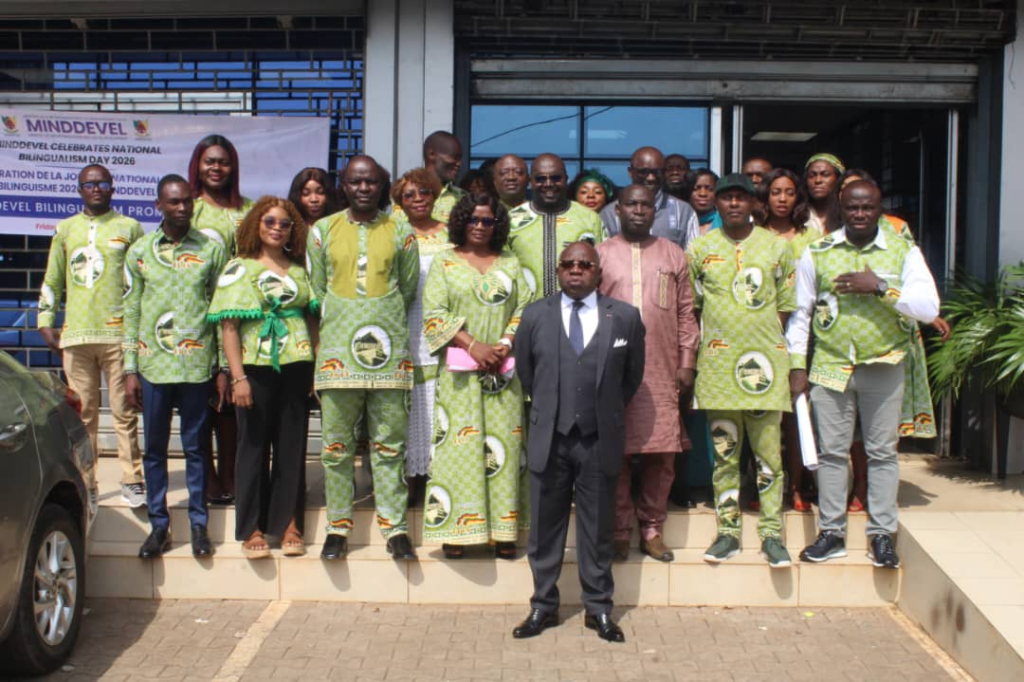
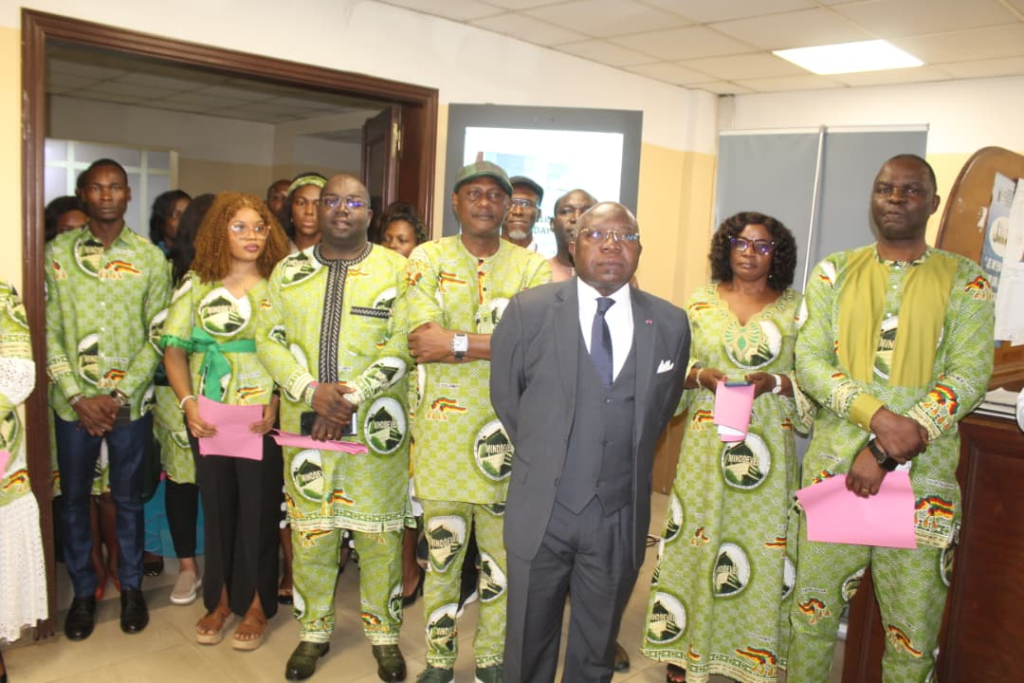
On the occasion of the National Bilingualism Day, the Ministry of Decentralization and Local Development strongly reaffirmed its pioneering role in promoting national unity. For the Ministry, bilingualism transcends mere constitutional enshrinenent; it serves as a powerful lever for administrative performance and stands as a fundamental pillar of Cameroon’s national identity. The event took place on Friday 6 February 2026 and was driven by the Translation and Bilingualism Promotion Division. MINDDEVEL successfully hosted the second year of the ‘‘MINDDEVEL’s Bilingualism Promotion Breakfast,’’ marking an operational milestone in mainstreaming both official languages across local governance structures.



This year’s event established concrete performance indicators designed to track and accelerate the implementation of bilingual practices both within the Ministry and across the various Regional and Local Authorities. To bridge policy with grassroots reality, the institutional roadmap focuses on three main action items:
Bilingual Signage and Institutional Addressing: Implementing clear, standardized, and inclusive bilingual signage across all public services in administrative and local offices under Minddevel. This ensures that spatial communication represents both official languages equally, providing an accessible environment for all citizens.
First-desk Reception and User Services: Guaranteeing that public users receive high-quality, professional assistance in either English or French from their very first point of contact, embedding linguistic readiness into daily administrative workflows.
Grassroots Governance and Local Inclusion: Transforming bilingualism into an active tool for social inclusion at the local level. By ensuring local councils operate efficiently in both languages, proximity governance becomes more responsive, transparent, and equitable.
By translating institutional frameworks into measurable actions at the grassroots level, MINDDEVEL ensures that decentralization goes hand-in-hand with national integration. Putting bilingualism into practice ultimately means delivering a public service that is closer to every single citizen, reinforcing national unity, and contributing to the sustainable development goals (SDGs) of local communities.